
🐅 BBC's First Net Zero Transition Plan: What Can We Learn?

Hey there,
Last week, the BBC made waves by publishing its first Net Zero Transition Plan. Developed in line with the Transition Plan Taskforce (TPT) Disclosure Framework, it details how they aim to achieve net zero carbon emissions by 2050. As the world’s leading public service broadcaster, the BBC is leveraging its influence to lead by example and drive industry-wide change. So what can we learn from their transition plan?
Key Emissions Targets
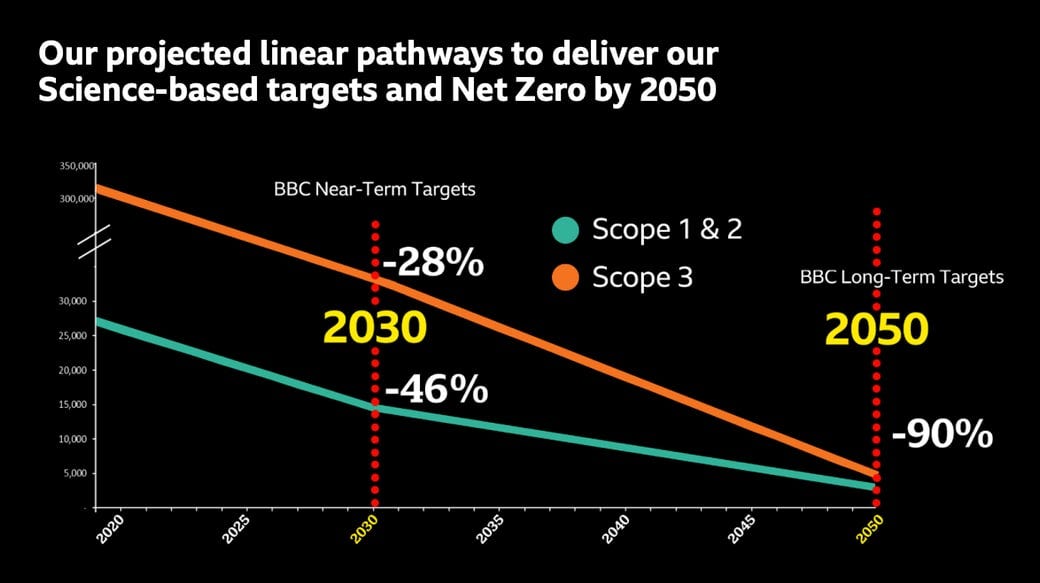
The BBC’s climate targets, validated by the Science-Based Targets initiative (SBTi), include:
Scope 1 & 2: 46% reduction by 2030/31 and 90% by 2050/51 from a 2019/20 baseline
Scope 3: 28% reduction by 2030/31 and 90% by 2050/51
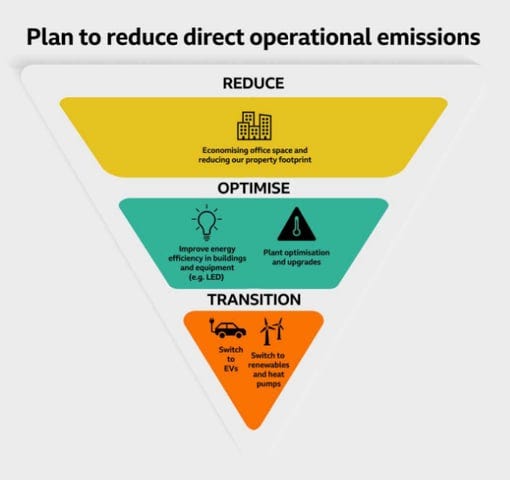
Scope 1 & 2 Strategy: Reduce, Optimise, Transition
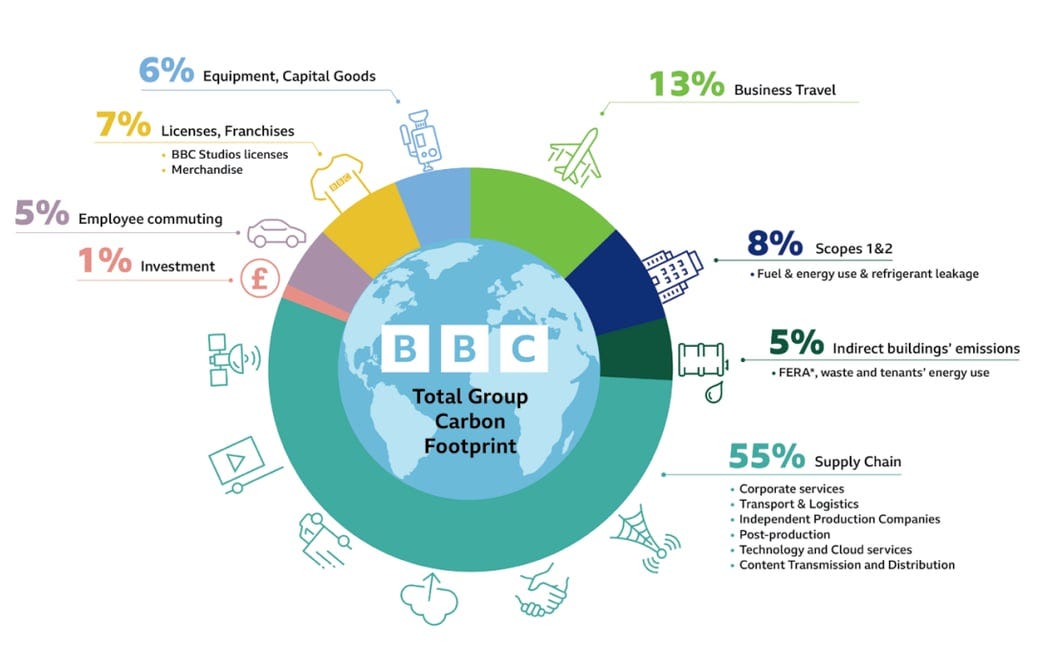
Scope 1 & 2 emissions account for 8% of the BBC’s total carbon footprint.
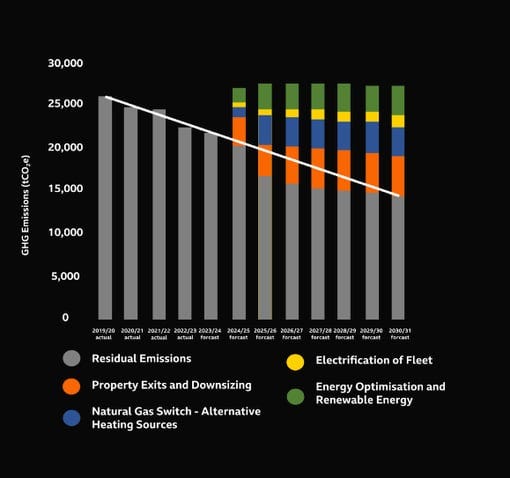
So far they have already achieved a 21% reduction since 2019/20 (from 27,024t CO2e to 21,391t CO2e)
Their strategy focuses on reducing fossil fuel reliance and optimising operations through:
Property Rationalisation: Cutting operational emissions by optimizing office space and reducing the property footprint.
Energy Optimisation and Renewables: Increasing renewable energy use through solar installations and implementing energy-saving measures like LED lighting, presence detectors, and temperature controls.
Electrifying Heating Systems: Transitioning from gas-fired boilers and refrigeration chillers to electric heat pumps. In 2024, the BBC completed one of the largest retrofit projects installing heat pumps at its Glasgow office, resulting in a reduction of 900t of emissions.
Fleet Electrification: Transitioning ~700 vehicles to EVs.
The BBC’s decarbonisation model for the next 5 years highlights how each of these areas will contribute to further emissions reductions.
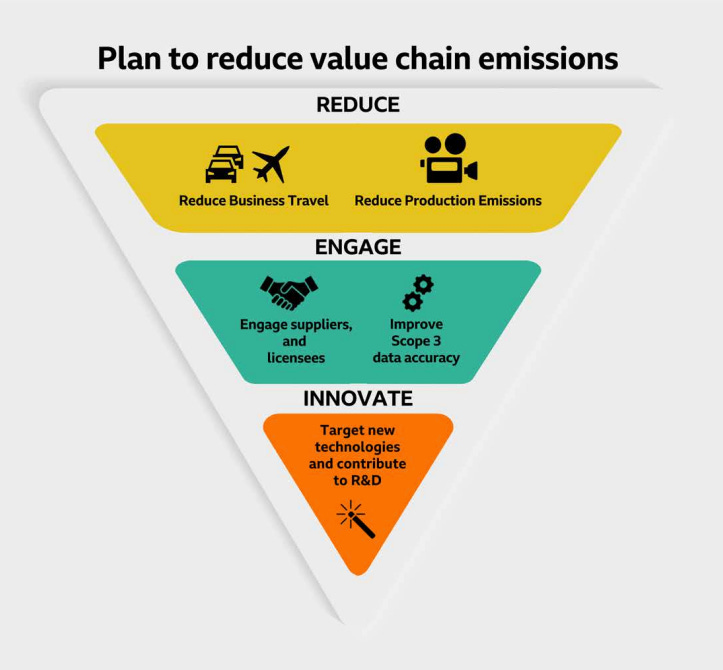
Scope 3 Strategy: Reduce, Engage, Innovate
Scope 3 emissions account for the rest of BBC’s carbon footprint, making up 92% of their total footprint. As such, much of the BBC’s strategy focuses on its value chain - engaging suppliers, contractors, employees and licensees to decarbonise operations.
Their fourfold approach focuses on:
Productions: Targeting 100% compliance with sustainable production standards by reducing fuel consumption and adopting renewables.
Business Travel: Cutting back unnecessary business travel by setting targets with divisions and prioritising low-carbon alternatives for business travel.
Licensees: Embedding sustainability requirements into licensed products and merchandise, and collaborating with licensees on decarbonisation opportunities.
Supply Chain: Actively engaging suppliers through sustainable procurement processes and embedding decarbonisation into service agreements.
Collaboration is Key
The BBC’s supply chain is its largest emissions contributor, accounting for 55% of the organisation’s carbon footprint. Every year, the BBC works with over 7,000 suppliers of varying sizes, with half of its supply chain emissions coming from its top 30 suppliers.
A major challenge acknowledged early on was the reliance on suppliers and the variability of data quality. The BBC’s current Scope 3 emissions are calculated using spend-based methods, but a lack of direct emissions data from suppliers limits their ability to accurately track, analyse, and reduce emissions. They recognise that supplier maturity varies and that achieving net zero hinges on their suppliers joining the decarbonisation effort.
🎓 Why does data quality matter? Check out this blog
To address this, the BBC has outlined four key approaches:
Sourcing: Embedding decarbonisation into end-to-end procurement processes. Sustainability questions will be included in all UK tenders and weighted questions included in high-impact tenders.
Contracting: Including sustainability schedules and decarbonisation accountability in high impact contracts.
Transparency: Launching a Sustainable Supply Chain Code of Conduct to drive accountability.
Collaboration: Partnering with high-spend, strategic suppliers to set science-based targets, report verified emissions, use renewable energy, and implement reduction initiatives
Engagement and collaboration with staff, suppliers, industry, and audiences to educate and embed sustainability was a key message across BBC’s strategy. Because, without everyone on board, none of this can be achieved.
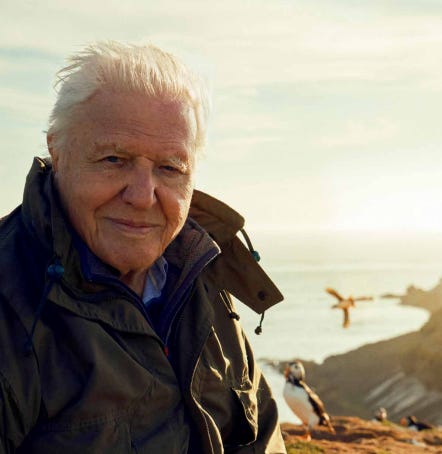
A reminder emphasised by the great Sir David Attenborough:
“We all need to play our part. It’s surely our responsibility to do everything within our power to create a planet that provides a home not just for us, but for all life on Earth.”
Read BBC’s Transition Plan Here
🔖 Are You Starting on a Supply Chain Engagement Project?
Check out our latest 4 minute guide providing tips on how to engage suppliers on carbon accounting ⬇️
Tips on how to start engaging with your suppliers on Carbon Accounting.
Or watch this 6 minute clip on how to engage your suppliers with Sumday ⬇️

If you’re keen to bounce ideas, we’re always up for a chat.
Have a great weekend!
The Sumday Team

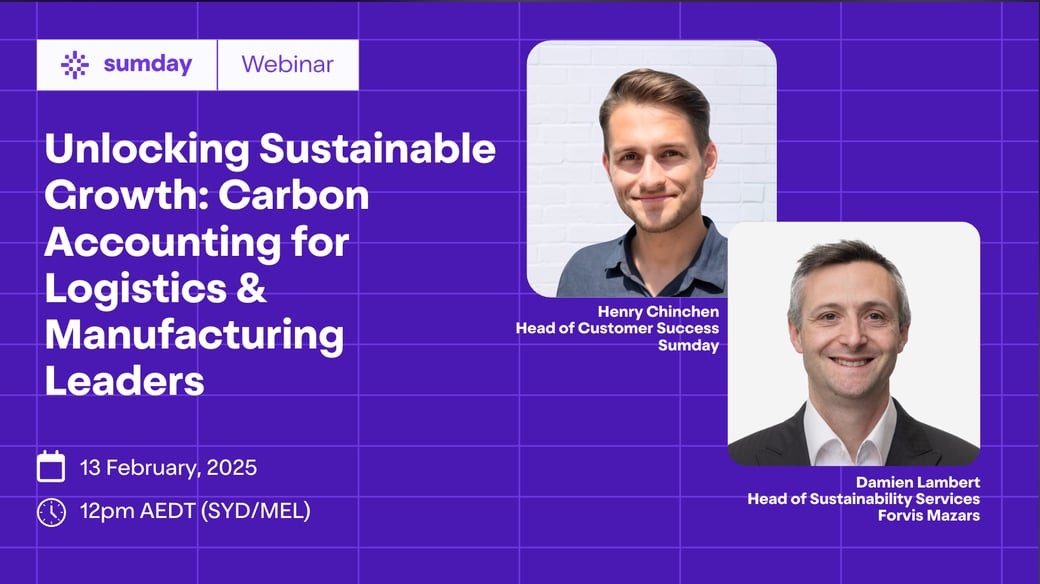
📺 Upcoming Webinar: Carbon Accounting for Logistics & Manufacturing Leaders
Join us on the 13th of February for an insightful logistics and manufacturing industry focused webinar with Damien Lambert, Head of Sustainability Services at Forvis Mazars Australia.
Whether you're facing growing demands for transparent reporting or simply exploring where to begin, this session will equip you with the tools and knowledge to drive sustainable growth in your organisation.
✈️ New Mini-Workpaper: Streamline Your Flight Emissions Calculations!
Exciting news from the Sumday team! Our first Mini-Workpaper is here to help you quickly and easily calculate flight distances in bulk across hundreds of transactions or itinerary lines.
With this tool, you'll get a summary of passenger kilometres by flight method, ready to enter straight into Sumday - saving you time and effort in your carbon accounting process.
Want to give it a try? Fill out this short form to get your copy ⬇️
Curious to see how it works? Watch this quick demo from the creator Toby!

🎓 Learning resources from the last month
Missed any of our learning resources from the last month? Catch up below:
❓ The Ask on SMBs: A New Kind of Accounting
🔖 Tips on how to start engaging with your suppliers on Carbon Accounting
🔦 Carbon Consolidation in the Spotlight
🎦 Webinar Recording: Assessing Materiality in Sustainability Reporting
🌱 Navigating Uncertainty: 3 Key Points for Advisors to Remind Clients
📦 Sustainability Now a Strategic Priority for SMEs: DHL Survey
🔮 2025 Trends Accountants & Advisors Should Know
🚀 2025 – The Year For Reporting Action

📄 IFRS Issues Guidance for Climate-First Approach Sustainability Reporting
The new guidance promotes a “climate-first” approach, prioritising climate-related disclosures under IFRS S1 and S2, and ability to expand into broader sustainability issues over time. Key topics include materiality considerations, factors to consider when disclosing climate risks and opportunities, metrics and targets, disclosure on guidance sources and key judgments made in preparing climate-related disclosures. It also addresses technical aspects like disclosure locations and reporting timelines, among others.
This streamlined approach aims to help businesses start their sustainability reporting journey and reflects the ISSB’s commitment to supporting the implementation of its standards.
Access the guide here ⬇️
Applying IFRS S1 when reporting only climate-related disclosures in accordance with IFRS S2
🌍 IAASB and IESBA Launch Global Baseline Standards for Sustainability Assurance
The International Auditing and Assurance Standards Board (IAASB) and the International Ethics Standards Board for Accountants (IESBA) unveiled their interoperable global baseline sustainability assurance standards and ethics and independence standards for sustainability reporting and assurance. The ISSA 5000 and IESSA standards establish clear expectations for ethical behaviour in sustainability reporting and assurance, empowering practitioners and organisations to enhance trust and confidence in sustainability information.
In jurisdictions adopting the standards, both ISSA 5000 and IESSA become effective for periods starting on or after December 15, 2026, with early adoption encouraged.
The Key features of IESSA include:
Addressing challenges such as immature data systems and forward-looking information in sustainability reporting.
Mitigating unethical practices like greenwashing and pressures to act unethically.
Enhancing investor protection by fostering trust and alignment with ethical best practices.
The IESBA is hosting a series of global webinars to help stakeholders adopt these standards. Visit here for the schedule.
Access both standards and their 4 page factsheet here
🇦🇺 Australia Introduces $2B Green Aluminium Production Credit Scheme
The Australian government has announced a $2 billion Green Aluminium Production Credit, available from 2028–29, to help aluminium smelters transition to renewable electricity. Scope 2 emissions, which make up around 85% of aluminium smelting emissions, are a key focus of the initiative.
Smelters achieving significant decarbonisation progress by 2036 can negotiate emissions-linked credit contracts, receiving payments per tonne of green aluminium produced for up to 10 years.
Part of the Future Made in Australia plan, this credit aims to reduce industrial emissions, strengthen the green metals sector, and position Australian aluminium as a global leader in sustainability. source
🇨🇭 Switzerland Sets 65% Emissions Reduction 2035 Target
Switzerland has announced their new climate goal to cut greenhouse gas emissions by 65% by 2035, compared to 1990 levels, ahead of submitting their updated Nationally Determined Contribution (NDC) under the Paris Agreement. Switzerland’s new targets are aligned with their 2023 Climate and Innovation Act, which enshrines their 2050 net zero target into law. The law includes interim national and sectoral reduction targets, energy reduction initiatives, and incentives to help migrate industry, buildings, and homes away from fossil fuels, as well as mandating all companies to achieve net-zero emissions by 2050. source
✈️ Amex New Carbon Pricing Solution for Business Travel
American Express Global Business Travel (Amex GBT) has launched a new solution enabling businesses to apply an internal carbon price to their corporate travel and use the funds to support decarbonisation projects. The tool allows companies to pick a carbon calculation methodology (from IATA, ICAO, France’s ADEME, UK’s BEIS, US EPA), track their flight emissions, and add a visible carbon fee to invoices and booking systems. Amex added that aligning carbon pricing with the emissions specific to a traveler’s flights at point of sale can support employee engagement and incentivise more sustainable economic decisions. source
🌱 Rockefeller Foundation Invests $500K in TNFD to Boost Nature Reporting
The Rockefeller Foundation has invested $500,000 in the Taskforce on Nature-related Financial Disclosures (TNFD) to support the global scale-up of nature-related risk and impact reporting. According to the UN, biodiversity loss is escalating, with 1 million species at risk of extinction and ecosystems declining by an average of 47%. Nature-based solutions could deliver 37% of the climate change mitigation needed by 2030, yet natural capital remains underrepresented in financial decision-making. The investment will help companies and financial institutions assess and disclose their dependencies and impacts on nature, aligning biodiversity considerations with financial decision-making. Over 500 corporates have already adopted TNFD for 2024/2025. View the full list of adopters here. source